Top Factors to Consider When Choosing a Charge Battery Supplier?
Choosing the right charge battery supplier is crucial in today’s fast-paced market. With a projected growth of over 15% in the charge battery industry by 2025, decision-making requires in-depth knowledge. According to a report by Research and Markets, factors like quality, cost, and supplier reliability play a significant role in procurement strategies. Industry expert Dr. James Mulholland emphasizes, “A supplier’s track record in innovation often correlates with the technology of their batteries.”
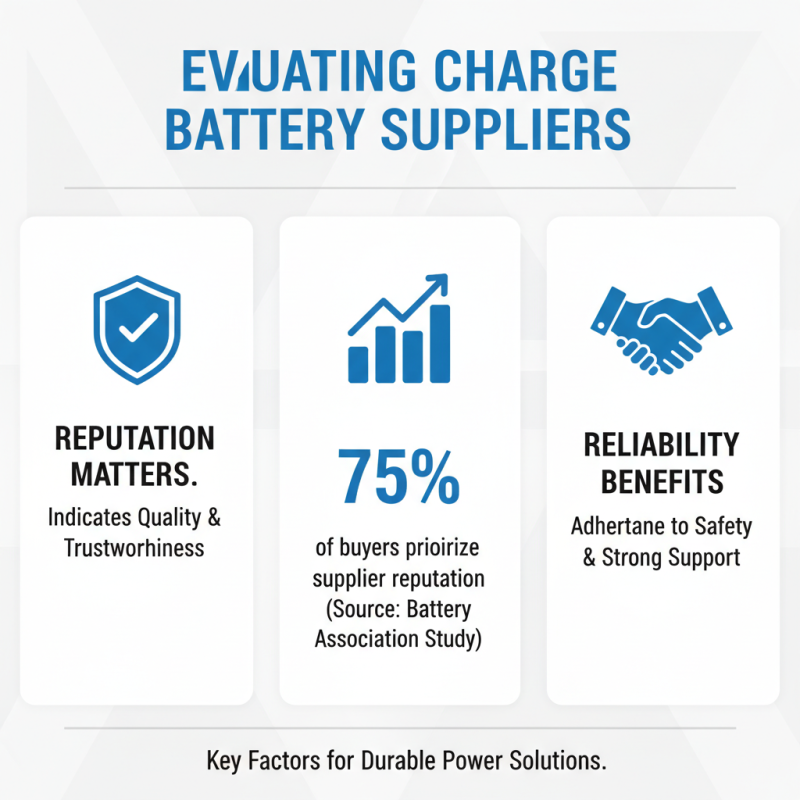
When evaluating potential suppliers, look beyond prices. Quality assurance and certifications are vital in ensuring battery performance. Listening to expert opinions can guide purchasing decisions. However, questions may arise about a supplier's capacity to meet demands. It is important to reflect on past experiences with suppliers and seek recommendations. Opting for a reliable partner can define long-term success in the charge battery sector.
Navigating through options can be daunting. Many suppliers boast advanced technologies. Yet, not all claims hold up under scrutiny. Industry trends shift, and firms must adapt. Understanding your specific needs and the supplier’s capabilities is essential. In this evolving landscape, choosing wisely can protect your investment and ensure operational efficiency.

Understanding Your Battery Needs and Specifications
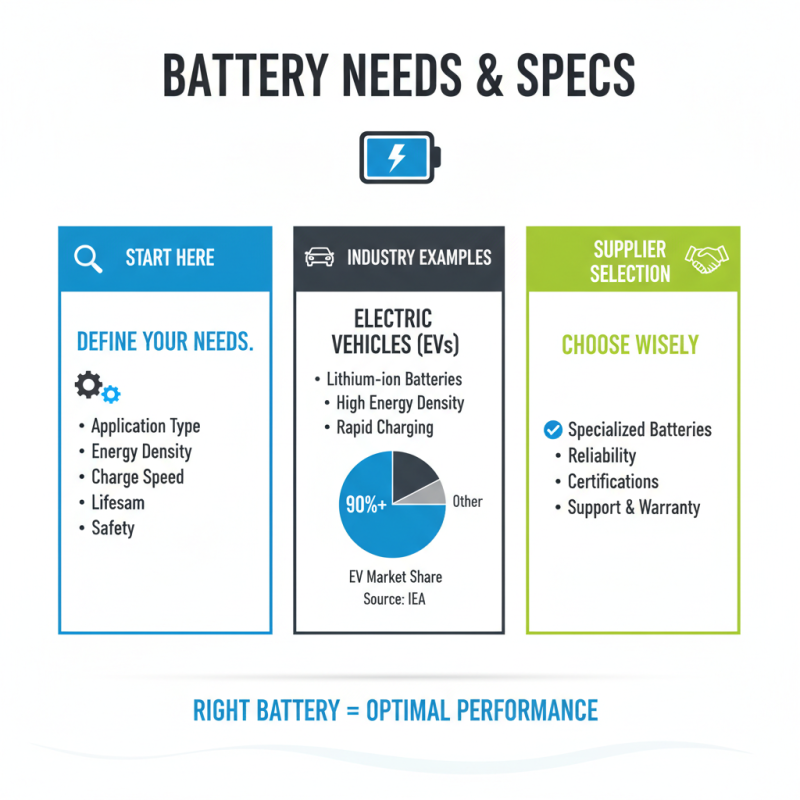
Choosing the right battery supplier begins with a clear understanding of your specific needs. Various industries rely on batteries for different applications. For example, electric vehicles often require lithium-ion batteries with high energy density and rapid charging capabilities. Reports from the International Energy Agency indicate that lithium-ion batteries account for over 90% of the market share in electric vehicle applications. This data underscores the need to select suppliers offering these specialized batteries.
Analysing your specifications is crucial. Voltage, energy capacity, and lifespan are key determinants in battery selection. For instance, a commercial application may need batteries that can sustain longer cycles while maintaining efficiency. Research shows that batteries with a longer cycle life can reduce operational costs significantly. However, some suppliers may market products that do not meet these critical metrics, leading to performance issues. Thus, assessing the technical capabilities of a supplier is essential.
It's also important to consider the reliability of suppliers. A study by Bloomberg NEF highlighted that supply chain stability is a growing concern in the battery industry. As demand increases, some suppliers struggle to maintain inventory levels. This can lead to delays and potential losses for your business. Thoroughly vetting a supplier’s track record can help mitigate these risks. Understanding both your needs and the supplier’s capabilities is key to forging a successful partnership.
Comparing Pricing and Payment Terms
When comparing pricing and payment terms for battery suppliers, it’s crucial to evaluate total costs. Start by looking beyond the base price. Additional fees can sneak in, inflating your costs. Be aware of handling charges, shipping fees, and taxes. Clarifying these upfront can save you headaches later.
Next, consider payment terms. Some suppliers offer flexible options, which can aid your cash flow. Monthly payments might ease your budget constraints. Alternatively, discounts for early payments can provide savings. Look for suppliers who are transparent about their payment structures. This builds trust and ensures smoother transactions.
Discussing these factors with potential suppliers can reveal their flexibility. Some may negotiate better terms based on order volume. Don’t hesitate to ask questions and express concerns. This dialogue can gauge their willingness to work with you. A reliable partner will prioritize your needs and provide clarity in their pricing strategies.
Assessing Quality Assurance and Testing Procedures
When selecting a charge battery supplier, quality assurance and testing procedures are essential. A reliable supplier should implement strict testing protocols. This ensures the batteries meet safety and performance standards. Look for suppliers that conduct third-party testing. This adds credibility and transparency to their quality assurance process.
Understanding the supplier's quality assurance practices can reveal a lot. Inquire about the materials used. High-quality raw materials typically result in better battery performance. Additionally, consider the frequency of testing. Regular testing indicates a commitment to maintaining standards. Examine the certification process as well. Certifications from recognized organizations enhance trust.
It is important to reflect on any past experiences. Maybe you’ve worked with suppliers lacking in quality controls. Such experiences highlight the need for thorough evaluations. Ask suppliers about their quality failures and improvements. Their responses can provide insight into their reliability and growth mindset. Ultimately, a careful approach to understanding quality assurance will lead to better supplier choices.
Exploring Customer Support and After-Sales Services
When selecting a battery supplier, customer support and after-sales services are crucial factors. Effective customer support with quick response times enhances the overall experience. Reports indicate that 70% of customers consider support quality when making a purchase decision. A reliable supplier should offer 24/7 support channels, including phone, email, and chat options.
Tips: Evaluate response times during your initial inquiries. This will give you insights into their customer service efficiency.
Look for suppliers with comprehensive after-sales services. Warranty policies can vary significantly. Data shows that 60% of customers feel more confident when suppliers provide extended warranties. Knowing that a supplier stands by its product is invaluable. Ask about technical support and guidance for troubleshooting.
Tips: Seek references from other customers about their after-sales experience. This will paint a clearer picture of the supplier's reliability.
Some suppliers may have attractive offers, but their service may fall short. Ensure that you assess the quality of support alongside prices. A lower upfront cost can lead to higher long-term expenses if service is lacking. Prioritize a supplier that combines fair pricing with exceptional support.
Top Factors to Consider When Choosing a Charge Battery Supplier
| Factor |
Importance Level (1-5) |
Comments |
| Customer Support Availability |
5 |
Prompt support during business hours is essential for quick issue resolution. |
| After-Sales Service Quality |
4 |
Effective after-sales service increases customer satisfaction and loyalty. |
| Warranty Period |
5 |
Longer warranties indicate confidence in product durability. |
| Delivery Times |
4 |
Timely delivery is critical for maintaining project schedules. |
| Technical Expertise |
5 |
Suppliers with strong technical knowledge can offer better solutions. |
| Flexible Return Policy |
3 |
A flexible return policy can mitigate purchase risks for customers. |
| Cost Transparency |
4 |
Clear pricing helps avoid hidden fees and builds trust. |