Top 10 Tips to Find the Right Car Battery for Your Vehicle?
Finding the right car battery can seem daunting. Many vehicle owners face this challenge at some point. Choosing the wrong battery may lead to starting issues or even engine problems.
When you set out to find car battery options, it is vital to consider your vehicle's specific requirements. Different cars require different types of batteries. Not all batteries will suit every car, and compatibility is key.
Take into account factors like size, capacity, and power needs. Quality matters too; a cheaper battery may save you money upfront, but could cause problems later. Sometimes, the perfect battery is overlooked. Reflect on your choices carefully, and make sure to research before making a purchase. This approach can lead you to the right battery for your vehicle.
Identifying the Correct Battery Group Size for Your Vehicle Model
Choosing the right battery group size is crucial for your vehicle. Each car model requires a specific battery size to function optimally. Fitting a battery that’s too large or too small can lead to performance issues or even damage.
Start by checking your owner's manual. It usually provides essential specifications. If it's missing, you can search online. Online resources can also guide you to the correct size. Keep in mind that many batteries have group size numbers stamped on them. Measure your old battery if you can. This can help confirm the right fit. Remember that most vehicles require a Group 24, 27, or 35 battery size.
Ensure the new battery has the same dimensions as your original. A snug fit is vital for safety and performance. You can also seek advice from a local mechanic or an expert. They can provide insights on the best match. It’s easy to overlook details in this process. Double-checking group sizes can save you time and money. Don’t hesitate to ask questions or seek clarification when in doubt.
Top 10 Tips to Find the Right Car Battery for Your Vehicle - Identifying the Correct Battery Group Size for Your Vehicle Model
| Vehicle Make |
Model |
Year |
Battery Group Size |
Cold Cranking Amps (CCA) |
| Toyota |
Camry |
2018 |
Group 35 |
680 CCA |
| Honda |
Civic |
2017 |
Group 51 |
510 CCA |
| Ford |
F-150 |
2019 |
Group 65 |
750 CCA |
| Chevrolet |
Malibu |
2020 |
Group 48 |
760 CCA |
| Nissan |
Altima |
2021 |
Group 35 |
700 CCA |
| Hyundai |
Sonata |
2015 |
Group 24F |
600 CCA |
| Kia |
Optima |
2016 |
Group 24 |
650 CCA |
| Subaru |
Outback |
2022 |
Group 35 |
800 CCA |
| Volkswagen |
Jetta |
2020 |
Group 47 |
720 CCA |
| Mazda |
CX-5 |
2021 |
Group 42 |
650 CCA |
Understanding Cold Cranking Amps (CCA) for Optimal Performance
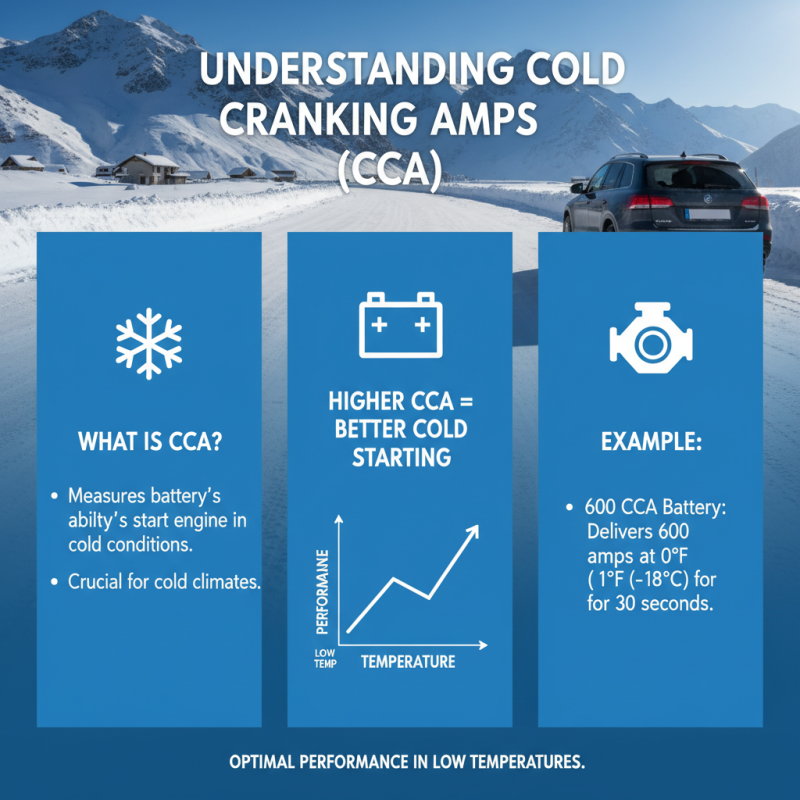
When selecting a car battery, understanding Cold Cranking Amps (CCA) is crucial. CCA measures a battery’s ability to start an engine in cold conditions. A higher CCA rating means better performance in low temperatures. For example, a battery with 600 CCA can deliver 600 amps at 0°F for 30 seconds. This is vital for vehicles in colder climates.
Battery specifications often confuse consumers. Many overlook the CCA, focusing instead on price or brand. However, according to industry reports, choosing a battery with adequate CCA significantly affects starting reliability. Vehicles with higher CCA ratings perform better in cold weather. For instance, if you live in an area where temperatures drop below freezing, aim for a CCA of at least 600.
Tip: Always check your vehicle’s manual for the recommended CCA. This ensures you select a battery that meets or exceeds your vehicle’s requirements. Another tip: assess your local climate. Understanding the typical cold temperature can help you choose wisely. If you live in an area with extreme winter conditions, don’t compromise on CCA ratings, as it plays a critical role in performance. A little research can save you headaches down the road.
Evaluating Reserve Capacity (RC) for Extended Power Supply
When selecting a car battery, reserve capacity (RC) is crucial. It indicates how long a battery can supply power without being charged. This measurement is vital for those who may rely on battery power during emergencies or when using accessories with the engine off. According to industry studies, a battery with a reserve capacity of 90 minutes can support the vehicle's systems effectively.
Evaluating RC involves understanding your vehicle's power needs. If your car has advanced electronics, a better reserve capacity is essential. Not all drivers consider this. Some may opt for cheaper options, only to face unexpected power failures. A battery with insufficient RC could leave you stranded.
A quality battery should provide reliable energy for various conditions. Reports show that batteries with much higher RC ratings tend to last longer. However, this also comes with a higher price tag. This makes it imperative to balance the cost with your vehicle's specific requirements. Awareness of these details can prevent the inconvenience of frequent replacements or unexpected breakdowns.
Choosing Between Lead-Acid and AGM Batteries for Your Needs
When choosing a car battery, the decision often boils down to lead-acid versus AGM (Absorbent Glass Mat) batteries.
Lead-acid batteries are traditional and widely used. They are cost-effective and suitable for everyday vehicles. However, they tend to be heavy and may require
regular maintenance, which some drivers overlook. In colder climates, they also struggle to perform optimally.
AGM batteries, on the other hand, offer several advantages. They are lighter and can withstand deeper discharges. This makes them ideal for
modern vehicles with advanced electronic systems. Unfortunately, they come at a higher price point. Many people find it hard to justify the expense.
Yet, for those who rely on their vehicles, this investment can pay off in reliability and durability.
Your choice ultimately depends on your driving habits and vehicle needs. Are you driving in extreme conditions? Do you frequently use
power-hungry accessories? Reflect on these questions before making a decision. It’s crucial to evaluate both types carefully to avoid potential regrets later on.
Fueling your vehicle with the right battery could make a significant difference in your overall experience.
Considering Warranty and Brand Reputation for Long-term Reliability
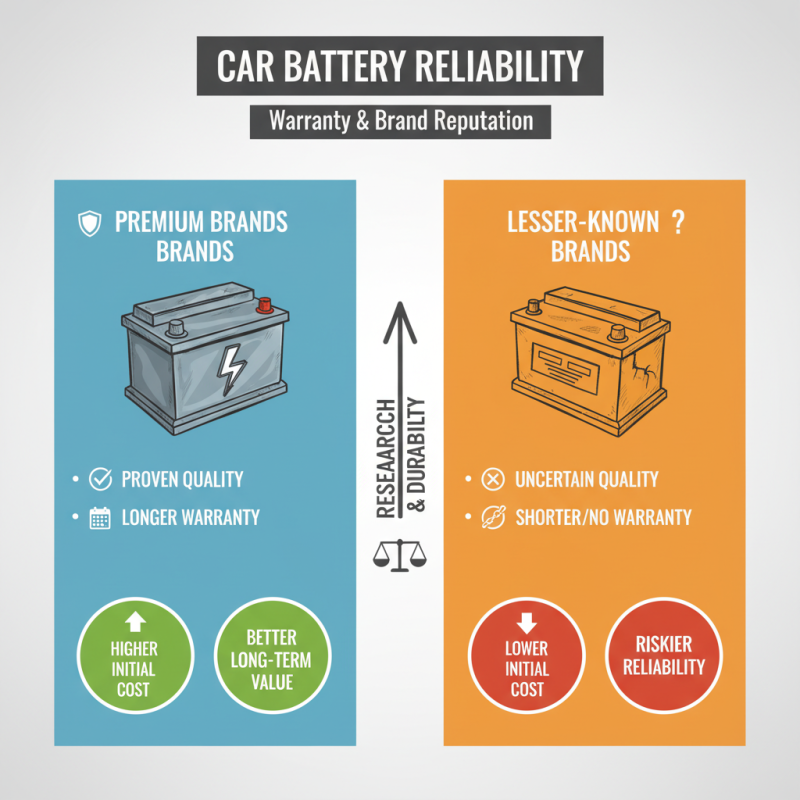
When searching for the right car battery, brand reputation and warranty are key factors. A strong brand often indicates quality and reliability. Many manufacturers invest in research and development to build durable batteries. Choosing a lesser-known brand might save money, but it can be a gamble. A high-quality brand may cost more upfront, yet it may last longer and perform better.
Warranties enhance your peace of mind. A solid warranty shows confidence in the product. Look for batteries with extensive warranties, ideally five years or more. Be wary of shorter terms; they might hint at potential issues. Always read the fine print, as some warranties have specific conditions. You could find a great battery but realize too late that the coverage is limited.
It’s essential to reflect on your needs. Are you driving in extreme conditions? If yes, you might want a more reliable battery. Understand your vehicle’s requirements before making a choice. Don’t hesitate to ask about expert opinions. Sometimes, outside perspectives can uncover aspects you hadn’t considered.