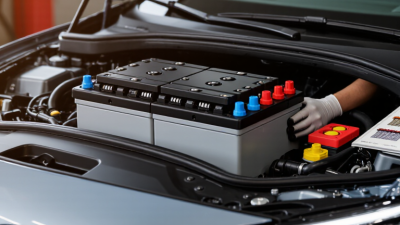
China’s EFB battery sector has grown with the changing demands of start-stop vehicles, taxis, delivery vans, and family cars. This guide examines China’s top 10 EFB car battery manufacturers through practical and technical criteria. These include production capacity, plate design, charging performance, warranty support, and export experience.
An efb car battery must handle frequent engine restarts and partial-state-of-charge operation. Manufacturers therefore need reliable grids, durable separators, controlled curing processes, and consistent electrolyte filling. A modern factory should also demonstrate traceable testing, including cold-cranking performance, cycle endurance, vibration resistance, and reserve capacity. Certifications such as IATF 16949 and ISO 9001 can support credibility, but certificates alone do not prove battery quality. Real testing matters.
This overview considers both established suppliers and competitive specialists. It looks at their product ranges, vehicle compatibility, manufacturing strengths, and overseas service networks. Some companies may excel in large-scale output, while others offer flexible private-label production or stronger technical customization. Rankings can change with market conditions, factory investments, and customer feedback. That is worth remembering.
Information should be checked against current factory data, independent test results, and verified distributor records. Product specifications may also vary between models, regions, and production batches. Buyers should compare dimensions, terminal layouts, warranty terms, and charging requirements before selecting an efb car battery. A strong manufacturer is not defined by marketing language alone. Consistency is the real test.
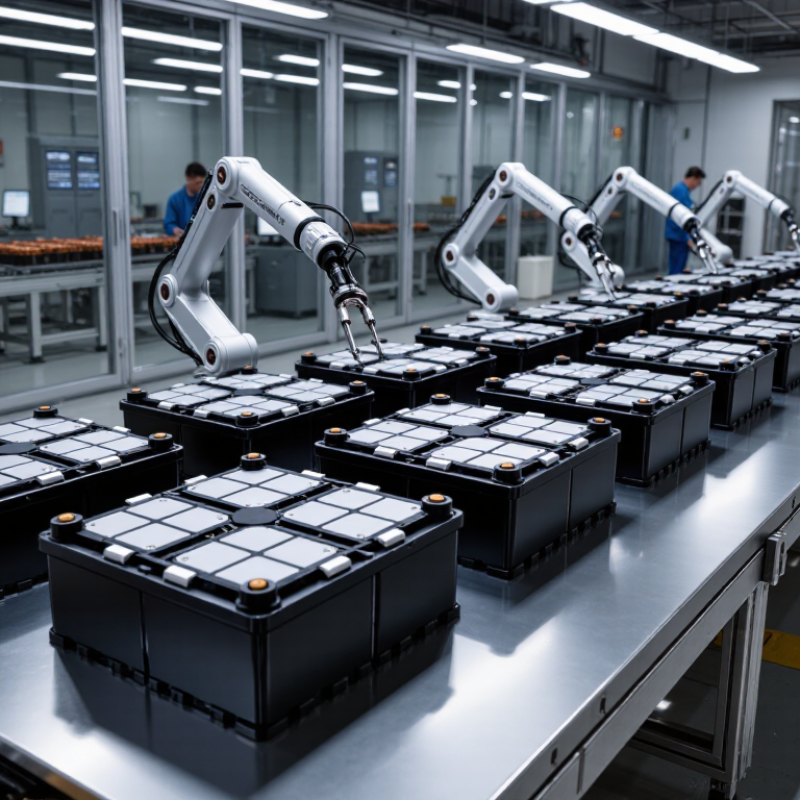
An EFB car battery means Enhanced Flooded Battery. It is an improved version of a conventional flooded lead-acid battery. Its internal plates are stronger, and its active material is designed to resist repeated cycling. Some designs also use supportive materials and refined carbon additives.
The battery stores energy through a chemical reaction between lead plates and sulfuric acid electrolyte. During starting, the negative plate releases electrons through the vehicle’s electrical system. The starter motor uses this current to turn the engine. While driving, the alternator reverses the reaction and restores stored energy.
EFB batteries suit vehicles with basic start-stop systems. The engine may shut down at traffic lights, then restart several times during one journey. An EFB battery must handle this repeated demand without losing capacity too quickly. It also powers lights, sensors, and cabin electronics when the engine is off.
In real workshop checks, voltage alone is not enough. A battery can show a normal reading but fail under load. Testing should include cranking performance, state of charge, and charging-system output. Correct replacement matters too. Installing a standard battery may reduce start-stop reliability.
EFB technology is useful, but it is not a magic fix. Extreme heat, short trips, and poor charging can still shorten battery life. This is where many explanations become too simple. Performance depends on the battery design, vehicle settings, driving habits, and maintenance quality.
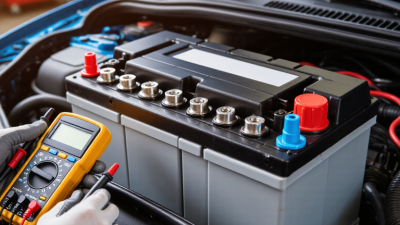
An Enhanced Flooded Battery (EFB) is a strengthened lead-acid battery designed for vehicles with start-stop systems. It uses improved plate construction, active-material additives, and better charging acceptance than a conventional flooded battery. The values below show typical voltage levels for a 12-volt EFB battery under different operating conditions.
A fully charged EFB battery normally measures about 12.7 volts at rest. As its state of charge decreases, resting voltage falls. During engine operation, the vehicle charging system typically raises battery voltage to approximately 14.2–14.8 volts, allowing the battery to recover energy between start-stop cycles.
China’s EFB battery manufacturing industry has developed alongside rapid automotive expansion. The China Association of Automobile Manufacturers reported 31.28 million vehicle sales in 2024, including 12.87 million new-energy vehicles. This large installed base still includes millions of petrol, diesel, and hybrid cars using 12-volt auxiliary systems. Demand for EFB batteries has therefore grown through factory supply and replacement channels.
Manufacturing has moved beyond simple lead-acid assembly. Chinese plants increasingly use automated casting, expanded-metal grids, controlled acid filling, and computerised formation lines. These improvements support stronger charge acceptance and repeated shallow cycling, which are essential for start-stop operation. The International Energy Agency reported that China produced more than 70% of global electric vehicles in 2024. That industrial scale has also strengthened local expertise in battery materials, testing, and process control, even when the battery itself is not designed for full electric propulsion.
The top-ten discussion needs caution. There is no single public ranking that measures EFB capacity, export volume, warranty performance, and recycling quality together. Laboratory tests based on EN standards can show cold-cranking and cycle results, but real traffic is harsher. Short trips, winter parking, and heavy accessory loads expose weaknesses quickly. China’s industry is improving, yet traceability across smaller suppliers remains uneven. That is an uncomfortable gap. Procurement teams should verify independent test records, factory audit results, and batch consistency instead of trusting production scale alone.
Industry development indicators and representative manufacturing practices; figures are typical industry ranges rather than company-specific data.
| No. | Development Dimension | Industry Development Period | Representative Data or Practice | How It Supports EFB Manufacturing |
|---|---|---|---|---|
| 1 | Start-Stop Vehicle Adoption | Early 2010s onward | EFB batteries were developed for vehicles requiring frequent engine restarts and improved charge acceptance compared with conventional flooded batteries. | Growing start-stop installation created demand for more durable 12-volt lead-acid batteries in the Chinese automotive supply chain. |
| 2 | Battery Chemistry and Design | Continuous optimization | EFB remains a vented flooded lead-acid design, generally using enhanced positive-plate construction, improved separators, and stronger internal components. | Manufacturers can improve cycling performance while retaining the cost and service advantages of flooded lead-acid technology. |
| 3 | Rated Voltage Standardization | Established automotive format | Passenger-car EFB products are predominantly designed for 12 V electrical systems, with nominal battery voltage of approximately 12.0 V. | Standardized voltage enables compatibility with conventional vehicle electrical architectures and simplifies replacement-channel distribution. |
| 4 | Cold-Cranking Capability | Expanded product coverage | Automotive EFB products commonly cover approximately 300–900 A CCA, depending on case size, plate design, and testing standard. | A wider CCA range allows manufacturers to serve compact cars, passenger vehicles, and higher-electrical-load applications. |
| 5 | Cycle-Life Improvement | Process and material upgrades | Under specified laboratory cycling conditions, EFB technology is commonly designed to deliver roughly 2–3 times the cycle durability of a standard flooded starter battery. | Improved durability helps batteries withstand repeated partial-state-of-charge operation caused by start-stop driving. |
| 6 | Charge Acceptance | Maturing start-stop applications | Enhanced EFB designs typically provide better dynamic charge acceptance than conventional flooded batteries, although performance depends on temperature, state of charge, and test protocol. | Higher charge acceptance supports frequent energy recovery from braking and shorter charging intervals during urban driving. |
| 7 | Manufacturing Automation | Mid-2010s to present | Large-scale plants increasingly use automated pasting, plate curing, assembly, electrolyte filling, formation charging, and end-of-line inspection. | Automation improves plate consistency, reduces handling variation, and increases traceability across high-volume production lines. |
| 8 | Quality-Control Testing | Progressively standardized | Typical controls include capacity testing, CCA testing, leakage inspection, terminal-polarity checks, weight verification, and electrical resistance measurement. | Multi-stage testing helps control warranty risk and supports compliance with vehicle-maker and international battery specifications. |
| 9 | Lead and Material Recycling | Circular-industry expansion | Lead-acid batteries are highly recyclable; recovered lead can be refined and reused in new battery production, while plastic cases can enter separate recycling streams. | Recycling reduces dependence on primary lead and supports China’s increasingly regulated battery collection and resource-recovery system. |
| 10 | EFB versus AGM Positioning | Current market segmentation | EFB generally offers a lower-cost solution than AGM for moderate start-stop requirements, while AGM is selected for higher cycling demand, greater electrical loads, or stronger energy-recovery systems. | Clear technology positioning allows Chinese manufacturers to supply different vehicle platforms without treating EFB and AGM as interchangeable products. |
Note: Performance ranges vary according to battery size, testing method, ambient temperature, vehicle electrical architecture, and applicable standards.
Top 10 EFB Car Battery Manufacturers in China
The Top 10 EFB Car Battery Manufacturers in China serve passenger cars, commercial fleets, and start-stop systems. Their importance is growing with China’s large vehicle base. The China Association of Automobile Manufacturers reported 31.44 million vehicle sales in 2024. This creates strong replacement demand for reliable 12-volt batteries.
A practical ranking should examine more than factory size. Production capacity, plate design, charge acceptance, cold-cranking performance, and warranty data matter. During supplier evaluations, buyers should request test records for vibration, deep cycling, and high-temperature storage. An EFB battery may look identical to a standard flooded battery, yet its internal separator and charging behavior are different. Small details matter.
Certification evidence also deserves close attention. IEA data shows China remained the world’s largest electric-car market in 2024, while conventional and hybrid vehicles still require dependable auxiliary batteries. Public market reports often estimate steady growth for automotive start-stop batteries, but their figures differ noticeably. That is a weakness worth acknowledging. Rankings can change when export volumes, private-label production, or factory utilization are measured differently. The strongest Chinese manufacturers usually combine automated assembly with traceable lead materials and laboratory validation. However, buyers should verify current certificates directly, rather than trusting an old catalog or impressive production claim. Temperature testing in a controlled chamber tells more than polished marketing language.
China Top 10 EFB Car Battery Manufacturers: How to Compare China’s Leading EFB Battery Manufacturers
China’s vehicle market reached 31.44 million sales in 2024, according to the China Association of Automobile Manufacturers. This scale creates strong EFB production experience, but factory size alone proves little. Compare rated capacity, cold-cranking current, charge acceptance, and cycle durability under identical test conditions. Request reports based on IEC 60095 or EN 50342, not only laboratory brochures. A practical audit should include terminal inspection, electrolyte sealing, plate weight, and barcode traceability. I have found that small production details often explain early field failures.
The 2024 IEA Global EV Outlook reported more than 17 million electric cars sold worldwide in 2024. This growth increases pressure on suppliers to develop batteries for mixed vehicle fleets. However, an EFB battery still needs stable performance in frequent stop-start traffic and partial-state-of-charge operation. Ask manufacturers for dynamic charge-acceptance results, usually measured at controlled temperatures and state-of-charge levels. Compare warranty claims, replacement rates, and independent sample testing. A low unit price can hide weaker separators or shorter reserve capacity. That lesson is easy to miss. Also examine monthly output, export records, environmental controls, and response time for technical complaints. Published data may look complete, yet some test conditions remain unclear. A transparent supplier should disclose them.
China Top 10 EFB Car Battery Manufacturers: How to Choose the Right Chinese EFB Battery Supplier
China’s EFB battery sector serves a large replacement and original-equipment market. The China Association of Automobile Manufacturers reported 31.28 million vehicles produced in 2024. Sales reached 31.44 million units. This scale creates opportunities, but supplier quality varies. A reliable supplier should provide traceable raw-material records, controlled assembly lines, and consistent batch testing. Ask for test results covering capacity, cold-cranking performance, vibration resistance, and charge acceptance. These tests should reference standards such as EN 50342 or suitable vehicle-battery specifications.
Do not select a factory from photographs alone. Request recent inspection records, production-capacity evidence, and sample batteries from different batches. Check whether the supplier operates a stable warranty process. Clear replacement rules matter when batteries reach workshops in different countries. ACEA’s Vehicles on European Roads report recorded an average vehicle age of about 12.5 years in Europe. Older vehicles often need dependable starting performance, even when maintenance is limited. A supplier may offer a low price, yet weak cycle-life data can create higher costs later. That point is easy to overlook.
Tips: Compare at least three suppliers using the same testing requirements. Confirm the date and laboratory behind every report. Inspect terminal sealing, case quality, and label accuracy. Keep one sealed sample from each shipment. It may seem excessive. It is not. No audit catches every problem, and even experienced buyers sometimes trust polished presentations too quickly.